A bone deformity can affect more than physical appearance. Depending on its location and severity, altered bone alignment may change walking mechanics, joint loading, limb function, or the way everyday activities are performed.
People exploring bone deformity treatment in Nagpur should begin with a detailed evaluation because deformities can arise for very different reasons and therefore require different treatment strategies.
What Can Cause Bone Deformity?
Bone and limb alignment problems may be congenital, developmental, post-traumatic, or associated with other orthopedic conditions.
Some deformities become apparent during childhood, while others may develop after an improperly healed fracture or become more noticeable as functional demands change.
The key questions are:
- Where is the deformity located?
- Is it progressing?
- Does it cause pain?
- Does it affect limb length?
- Is joint movement restricted?
- Does it interfere with walking or function?
The answers help determine whether treatment is necessary and what form it might take.
Why Detailed Measurements Matter
Visual appearance alone is not enough for treatment planning.
Orthopedic assessment may include examination of limb alignment, joint movement, gait, limb length, muscle function, and previous injuries or procedures.
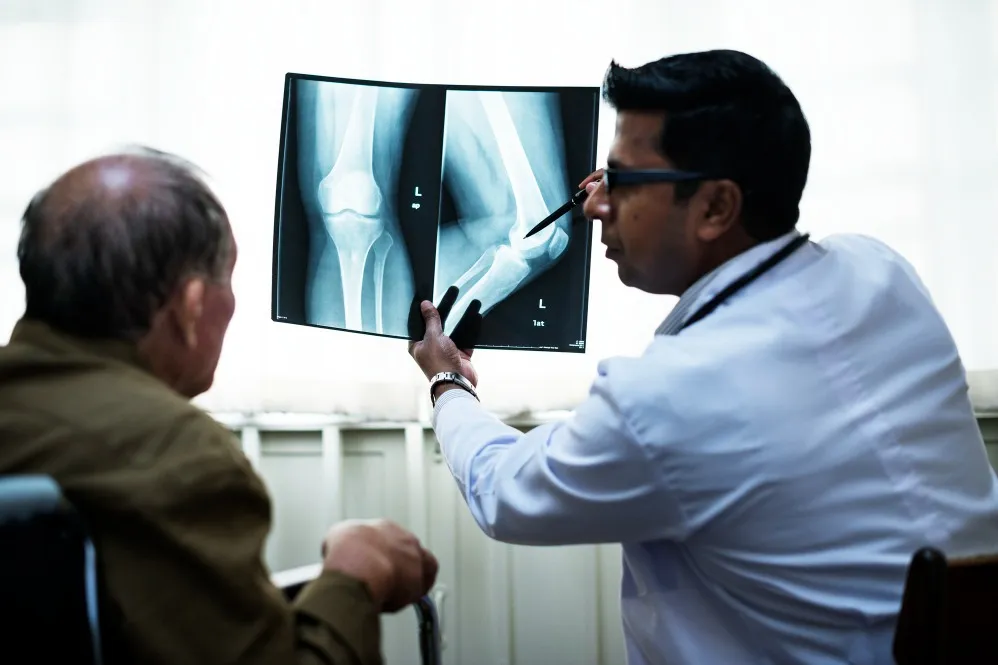
Standing or specialised X-rays may be used to measure alignment. Other imaging can be considered depending on the underlying problem.
Observation and Correction Are Different Decisions
Not every deformity needs surgical correction. Mild deformities that are stable and cause little functional difficulty may sometimes be monitored.
When a deformity significantly affects function, joint mechanics, progression, or quality of life, corrective treatment may be considered after a comprehensive evaluation.
The exact approach depends on the patient's age, skeletal maturity, deformity location, severity, symptoms, and underlying cause.
Questions to Ask Before Treatment
Patients and families should understand what the treatment is intended to achieve.
Ask about the cause of the deformity, whether it is likely to progress, what happens without intervention, which treatment options are available, and what rehabilitation or follow-up will involve.
Dr. Girish Motwani assesses orthopedic problems by relating alignment findings to symptoms and functional limitations rather than considering appearance alone.
For patients in Nagpur and other parts of Maharashtra, specialist evaluation can be particularly useful after previous fractures, during growth, or whenever altered alignment starts affecting mobility.
Effective bone deformity treatment in Nagpur begins with precise diagnosis and realistic treatment goals. Understanding the deformity in three dimensions,its location, severity, cause, and functional impact—provides a stronger foundation for deciding whether observation, rehabilitation, or corrective intervention is appropriate.
Keywords