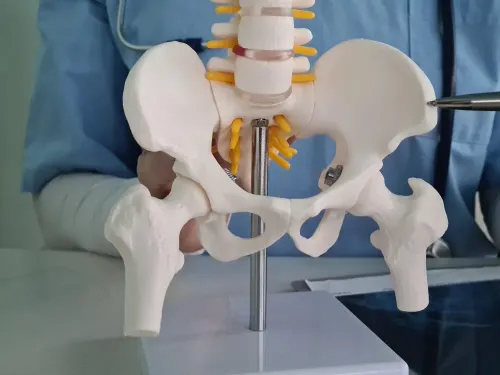

Severe damage on an X-ray does not automatically mean you need a joint replacement. The decision depends on your pain pattern, examination findings, loss of function, diagnosis, response to reasonable nonsurgical care, and whether your health makes major surgery appropriate.
Key takeaways
- Discuss replacement when pain disrupts sleep or daily activities despite nonsurgical care.
- Doctors combine your symptoms, examination findings, X-rays, and other tests when needed.
- Try appropriate exercise, weight management, medicines, injections, or braces before surgery.
- Compare recovery demands, implant limits, and risks for each affected joint.
Which symptoms suggest that joint damage has become severe enough to discuss replacement?
Replacement becomes a serious discussion when joint symptoms, not an X-ray label alone, are taking over daily life despite reasonable nonsurgical care. Persistent pain at rest or night pain that interrupts sleep is especially important. Severe joint damage also becomes more concerning with major loss of motion, deformity, instability, or weakness.
| Symptom or limit | What you may notice | Why it matters |
|---|---|---|
| Pain | Pain at rest, night pain, or pain despite medicines | Recovery and sleep are affected |
| Motion | Major loss of motion or stiffness | Dressing, bathing, or reaching becomes difficult |
| Stability and strength | Buckling, giving way, deformity, or weakness | Falls and unsafe movement become more likely |
| Walking | Shorter distances, limping, or reliance on a cane | Basic mobility is declining |
| Stairs | Difficulty climbing or descending stairs | Household independence is reduced |
| Daily life | Trouble working, sleeping, dressing, or bathing | The joint is limiting essential activities |
Age alone does not decide whether replacement is appropriate. A younger person with disabling symptoms may need a discussion, while an older person with severe X-ray changes but little pain may not. The examination, symptom history, and effect on function determine whether replacement offers a worthwhile improvement.
How do doctors confirm whether the joint damage is causing your symptoms?
A severe image does not prove that the joint is causing your symptoms. Doctors match the scan with your pain, stiffness, weakness, instability, and loss of function before recommending replacement.
1. Your doctor records where symptoms occur, when they started, whether pain occurs at rest or at night, and how walking, stairs, work, dressing, or sleep are affected.
2. A physical examination checks tenderness, range of motion, strength, deformity, joint stability, limb alignment, and signs that pain comes from another joint, the spine, nerves, or soft tissues.
3. Weight-bearing X-rays, when appropriate, show joint-space loss, bone-on-bone contact, deformity, collapse, and alignment under load. They often confirm end-stage osteoarthritis, rheumatoid arthritis damage, avascular necrosis, severe post-traumatic arthritis, or an unreconstructable fracture.
4. An MRI examines cartilage, ligaments, tendons, bone marrow, and early avascular necrosis. A CT scan gives detailed views of bone, complex fractures, deformity, and implant or reconstruction planning when X-rays do not answer the clinical question.
If the joint looks severely damaged but causes little pain or disability, that finding alone is not an indication for surgery. Replacement becomes relevant when the diagnosis, examination, imaging, and everyday limitations point to the same painful problem.
What nonsurgical treatment should be tried before joint replacement?
An adequate trial of conservative treatment means the plan matched your joint, you used it correctly for a reasonable period, and it still failed to provide enough pain relief or useful function. Severe damage on an X-ray does not require replacement if your symptoms remain manageable.
- Physiotherapy with strengthening, range-of-motion exercises, and movement training can improve support and flexibility. Stopping because exercises worsen sharp pain requires reassessment, not simply pushing harder.
- Weight reduction can reduce load on weight-bearing joints when excess weight contributes to symptoms. Activity modification replaces painful impact, deep bending, or repetitive loading with tolerable activities.
- A cane, walker, or other walking aid can improve stability and reduce joint load. Medicines such as paracetamol or anti-inflammatory drugs, when safe for you, and injections may provide additional relief.
- Selected joint-preserving procedures may fit the problem. Arthroscopy treats specific internal problems, osteotomy realigns a joint, fracture fixation repairs a break, and cartilage procedures address limited cartilage defects; none substitutes for replacement in every case.
Doctors do not require every possible treatment when pain is disabling, function is rapidly declining, or a proposed option is unlikely to help the damaged joint. Continuing ineffective care only delays a decision that may restore walking, sleep, or daily activities.
How does the decision differ for hip, knee, shoulder, ankle, and other joints?
The joint involved changes the threshold, implant choice, recovery plan, and activity restrictions. A severely damaged X-ray does not decide the operation; persistent pain, loss of function, examination findings, and failed nonsurgical care do.
| Joint | When replacement is considered | Implant and practical limits |
|---|---|---|
| Hip | Advanced osteoarthritis, avascular necrosis, fracture, or another destructive condition causing persistent pain and functional loss | Hip replacement usually improves walking and pain, but recovery includes precautions against dislocation, and high-impact activity remains limited |
| Knee | Pain and disability that restrict walking, stairs, sleep, or daily tasks, regardless of age | Knee replacement is not a normal-knee guarantee; stiffness, weakness, and limits on running or repeated jumping can remain |
| Shoulder | Damaged joint surfaces with pain and weakness after assessing rotator-cuff function and bone quality | Anatomic or reverse shoulder replacement may be selected; lifting limits and rehabilitation depend on cuff function and implant stability |
| Ankle | End-stage arthritis in a patient with adequate bone, usable soft tissues, and stable or correctable alignment | Ankle replacement preserves motion but can loosen, wear, migrate, or require revision; ankle fusion removes motion but offers a reliable alternative |
| Other joints | Elbow, wrist, finger, or subtalar damage assessed according to the involved surfaces, ligaments, bone, and demands | Replacement, fusion, reconstruction, or continued nonoperative care may fit better than one standard implant |
Severe deformity, neuropathy, vascular disease, infection, poor bone quality, inability to follow restrictions, or arthritis in nearby joints can change the recommendation. For ankle replacement especially, ask about the surgeon’s experience and the possibility of later fusion or revision.
What are the practical trade-offs and risks after replacement surgery?
Expect a hospital stay, rehabilitation, wound care, blood-clot prevention, time away from work, and temporary driving restrictions—not a guaranteed painless joint. Joint replacement recovery depends on the joint, surgical approach, strength, medical conditions, and the surgeon’s restrictions, not one universal timeline.
1. Before elective surgery, treat active infection and address nicotine use, uncontrolled diabetes, anemia, obesity-related risk, heart or lung disease, and poorly managed clotting risk. A delay for medical optimization can be safer than immediate surgery.
2. Follow wound instructions and prescribed clot prevention. Arrange help at home and ask when you can drive, return to work, climb stairs, or lift; the answer depends on pain control, reaction time, mobility, and job demands.
3. Expect joint-specific limits. A replaced knee is not a normal knee and may not tolerate high-impact sport; hip precautions can reduce dislocation risk, while ankle replacement preserves motion but can later require fusion or revision. Follow the surgeon’s restrictions rather than a generic online timeline.
4. Improvement is common, but persistent pain, stiffness, instability, infection, blood clots, nerve or blood-vessel injury, implant wear, or implant loosening can occur. Hip replacement also carries dislocation risk, and infection may require antibiotics, implant exchange, or staged revision surgery.
What should you ask before deciding whether replacement is right for you?
Before consenting, use your orthopedic consultation to test the joint replacement decision against these questions:
- What diagnosis caused the damage, which symptoms will surgery target, and what did examination show beyond the scan?
- Which nonsurgical options remain reasonable, and why would they help or fail?
- Which implant suits this joint, and what activity restrictions will apply?
- How will infection, smoking or nicotine, diabetes, medicines, anemia, and clot risk be managed during the preoperative assessment?
Recovery plans differ by joint and job:
| Concern | Ask about | Why it matters |
|---|---|---|
| Rehabilitation | Exercises, wound care, and therapy duration | Strength and motion return gradually |
| Driving | When braking, walking, and pain medicines permit driving | Returning too early is unsafe |
| Persistent symptoms | What happens if pain, stiffness, or instability remains | You may need further treatment or revision |
In Nagpur, Dr. Girish Motwani Best Orthopedic Surgeon - SUYOG can help assess foot, ankle, pediatric, diabetic-foot, or broader orthopedic questions.
Frequently asked questions
Which symptoms suggest that joint damage is severe enough to discuss replacement?
Persistent pain at rest, night pain that interrupts sleep, major loss of motion, deformity, instability, weakness, and difficulty with ordinary activities justify a replacement discussion when reasonable nonsurgical treatment has not helped.
How do doctors confirm whether joint damage is causing symptoms?
Doctors compare your pain pattern and functional limitations with a physical examination and imaging, usually weight-bearing X-rays for the hip, knee, or ankle. They may order blood tests, MRI, CT, or joint-fluid analysis when another diagnosis must be excluded.
What nonsurgical treatment should be tried before joint replacement?
Treatment can include targeted physiotherapy, activity changes, weight management when relevant, walking aids, braces, medicines, and injections. The plan depends on the joint, diagnosis, medical history, and response to earlier treatment.
Does the decision differ for hip, knee, shoulder, and ankle replacement?
Yes. Hip replacement often focuses on pain with walking and loss of function; knee replacement also considers deformity and instability; shoulder replacement depends on the rotator cuff and fracture or arthritis pattern; ankle replacement requires careful assessment of alignment, bone quality, and nearby joints.
What should you ask before deciding whether replacement is right for you?
Ask what diagnosis explains your symptoms, which treatments remain reasonable, what improvement is realistic, which implant and procedure are proposed, how long recovery will take, what restrictions apply, and what complications or alternatives you face.