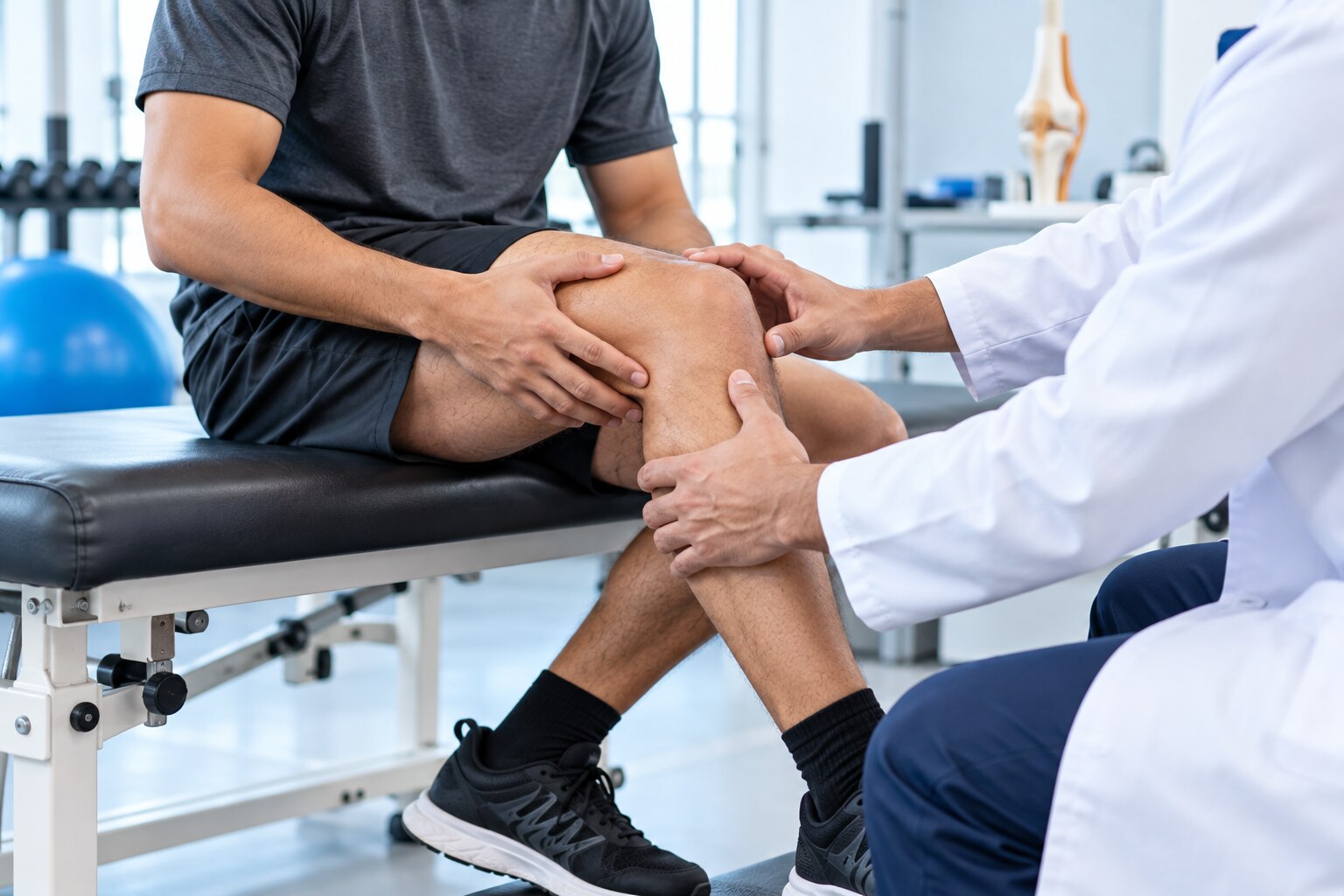
Pain-free walking is an important milestone, but it does not prove that you are ready for cutting, jumping, contact or competition. You will learn how to move through modified activity, normal training and full performance while using symptoms, strength, balance, technique and next-day response to decide when to progress or seek reassessment.
Key takeaways
- Progress from walking to sport only when symptoms remain stable afterward.
- Match restrictions to the injured tissue, healing stage, and sport demands.
- Seek reassessment for worsening pain, swelling, weakness, numbness, or instability.
- Bring injury details, treatment records, imaging reports, and your activity goals.
What does a safe return to activity actually involve?
Safe return to activity happens in stages, not on one clearance date, because tissue healing, strength, movement control and sport demands do not recover simultaneously. Sports injury recovery is successful when you tolerate each level without worsening symptoms during the session, later that day or the following morning.
- Return to participation means rejoining modified training: reduced speed, duration, contact, jumping or competition exposure while rehabilitation continues.
- Return to sport means completing normal training and competition demands, including repeated efforts, cutting, landing and contact when those actions belong to your sport.
- Return to performance means reaching your pre-injury level of speed, strength, endurance, skill and decision-making. Being cleared for return to participation does not mean you are ready for this stage.
Pain-free walking is only an early checkpoint. Progression also depends on near-normal range of motion and strength, single-leg balance, repeated hops, change-of-direction control, sport-specific drills and a full training session without meaningful symptom increase afterward.
A percentage score, such as 90% limb symmetry, cannot guarantee readiness because it may miss endurance, landing quality or weakness in both legs.
Confidence matters alongside physical testing. Fear of re-injury, hesitation during a cut or reluctance to load the injured side can alter technique and increase risk. Discuss that response openly; graded exposure, sport-specific practice and clear criteria can rebuild trust before unrestricted competition.
How do you progress from walking to unrestricted sport?
Advance only after the current workload causes no meaningful increase in symptoms during the session or the following morning. Pain-free daily movement is the starting point, not proof that you are ready to compete.
- Walk normally on level ground, use stairs, and complete daily tasks without a limp, swelling, or loss of motion.
- Add low-impact exercise such as cycling, swimming, or an elliptical session. Progress when strength, balance, and movement quality remain steady afterward.
- Introduce jogging, then jumping and landing. Begin with short, flat efforts and increase duration before speed or intensity.
- Add sport-specific drills, including acceleration, deceleration, cutting, shuffling, and ball or equipment work. Advance only when you can repeat them without pain, hesitation, or technique breakdown.
- Complete a full training session before unrestricted play. Normal range of motion, near-normal strength, single-leg balance, repeated hops, change-of-direction control, and confidence all matter; no single limb-symmetry percentage guarantees readiness.
Hold or reduce the workload if pain rises as you exercise, swelling appears later that day or the next morning, or soreness changes your movement. Mild soreness that settles within 24 hours can fit a graded return to activity.
Stop and arrange reassessment for:
- Limping or inability to bear weight
- Reduced range of motion
- New weakness or giving-way
- Increasing bruising or swelling
- Sharp, localised bone or joint pain
- Loss of landing or cutting technique
How does the injury type change your restrictions and timeline?
Diagnosis and injury grade set the timeline, not pain alone. A mild muscle strain or low-grade ligament sprain may progress once walking, range of motion and strength are normal.
A severe ankle sprain can justify protected weight bearing and a brace, with immobilization for up to about 10 days; longer immobilization can stiffen the joint and delay function.
Use different protection for injuries that must biologically heal:
- Muscle strain: restore pain-free motion, then strength and sport-specific loading; sprinting waits until force and length are symmetrical.
- Ligament sprain: use a brace or tape while weight bearing; a high ankle sprain, marked instability or a severe grade needs a slower progression and possible imaging.
- Fracture recovery: protect the bone until examination and imaging support loading; jumping and contact wait longer than walking.
- Stress fracture: stop running and jumping; focal bone pain needs assessment, because early X-rays can look normal and MRI may be needed.
- Achilles tendon injury: a pop, failed push-off or inability to perform a single-leg heel raise requires assessment for rupture; tendon healing needs prolonged protection before running.
- Cartilage or osteochondral lesion: impact may remain restricted while the joint surface and swelling are evaluated.
- Dislocation: regain stability and motion under supervision before contact or twisting sports.
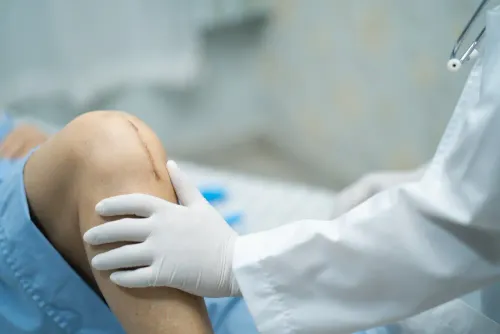
- Surgery: follow the procedure-specific weight-bearing, brace and wound restrictions; advancing early can disrupt repair.
A clinician should reassess worsening swelling, bruising, limping, weakness, instability or inability to bear weight instead of simply extending your exercise plan. Each milestone must match the tissue, grade and treatment.
Which warning signs mean you need reassessment or imaging?
Expected post-injury soreness should gradually ease and should not change your walking pattern. Arrange reassessment if symptoms worsen instead: increasing swelling or bruising, reduced motion, limping, weakness, instability, sharply localized bone pain, or inability to bear weight.
- Midfoot swelling, bruising on the sole, or inability to push off after a twist raises concern for a Lisfranc injury.
- Pain above the ankle, pain during external rotation or a squeeze test, and prolonged difficulty bearing weight suggest a high ankle sprain.
- A sudden pop behind the ankle, inability to push off, or failure to perform a single-leg heel raise requires assessment for Achilles rupture.
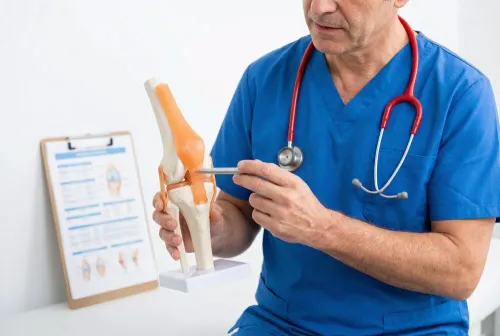
An orthopedic assessment checks tenderness, swelling, alignment, range of motion, strength, ligament stability, gait, and neurovascular function. The Thompson calf-squeeze test helps assess the Achilles tendon. Do not advance activity because the joint looks normal; a fracture can be hidden.
| Imaging option | What it helps detect | When it becomes relevant |
|---|---|---|
| X-ray | Fracture or joint alignment | Apply the Ottawa Ankle Rules: obtain ankle films for malleolar tenderness or inability to take four steps; obtain foot films for navicular or fifth-metatarsal tenderness or the same inability to bear weight. |
| Weight-bearing radiographs | Subtle displacement under load | Suspected Lisfranc or high ankle injury; non-weight-bearing images can miss it. |
| CT | Detailed bone injury | Radiographs are unclear and fracture or Lisfranc displacement remains suspected. |
| Ultrasound versus MRI | Tendon injury versus deeper bone, cartilage, or ligament injury | Ultrasound can clarify Achilles damage; MRI is preferred for suspected stress fracture after negative X-rays and helps define uncertain soft-tissue injuries. |
How can you prepare for a sports injury orthopedic appointment?
Bring a clear timeline and the decisions you want answered, not just a description of where it hurts. A sports injury orthopedic doctor needs to know what happened, what you can do now, and which activity you hope to resume first.
1. Record the injury date and mechanism: a twist, collision, fall, sudden sprint, landing, or gradual increase in pain. Note whether you heard a pop, felt immediate weakness, or could bear weight afterward.
2. Write down your training load before and after the injury, including running distance, gym sessions, matches, practice frequency, recent changes, and the movements that trigger symptoms.
3. List previous treatment: rest, ice, taping, brace, physiotherapy, exercises, injections, or surgery. Note what improved the problem and what made it worse.
4. Bring every medicine and supplement you use, including dose and frequency. Include blood thinners, diabetes medicines, and pain relievers because they affect treatment decisions.
5. Carry imaging reports and images, not only phone photographs of the report. Ask whether the findings match your examination and whether repeat X-ray, weight-bearing radiographs, ultrasound, CT, or MRI would change the plan.
6. Name the activity you want to resume first, such as walking, jogging, lifting, cutting drills, or competition. Ask what strength, balance, range-of-motion, hopping, and full-training milestones you must meet.
At an orthopedic consultation in Nagpur, Dr. Girish Motwani Best Orthopedic Surgeon - SUYOG can use these details to build a diagnosis-specific rehabilitation plan, rather than granting permission based only on pain. Pain-free walking alone does not prove readiness for sport.
Related items
Orthopedic Doctors Orthopaedic all orthopedic services available |
 | Achilles Tendon Injuries Treatment Achilles Tendon Injuries Treatment Achilles Tendon Injuries Treatment View product → |
Frequently asked questions
What does a safe return to activity actually involve?
A safe return uses stages that test healing, strength, movement control, and sport-specific demands. Progress only when symptoms do not worsen during activity, later that day, or the following morning.
How do you progress from walking to unrestricted sport?
Begin with comfortable walking, then add low-impact exercise, strength work, running, drills, and practice before competition. Increase one demand at a time and step back if symptoms worsen.
How does the injury type change your restrictions and timeline?
Bone, ligament, tendon, muscle, cartilage, and joint injuries have different loading limits and healing requirements. Your restrictions depend on the injured structure, treatment, examination findings, and sport demands.
Which warning signs mean you need reassessment or imaging?
Arrange reassessment for increasing pain or swelling, new weakness, numbness, instability, loss of movement, repeated giving way, or symptoms that persist into the next morning. Imaging may be needed when examination findings suggest a fracture, significant tear, or complication.
How can you prepare for a sports injury orthopedic appointment?
Record when the injury occurred, how it happened, activity limits, symptom changes, and treatments tried. Bring imaging reports, scan discs, medication details, previous medical records, and your target activity.
Related items
 | Osteochondral defects of Talus Osteochondral defects of Talus Osteochondral defects of Talus View product → |
Orthopedic all xray View service → |
 | Ankle and foot arthritis Ankle and foot arthritis View product → |
 | Foot Drop Foot Drop View product → |