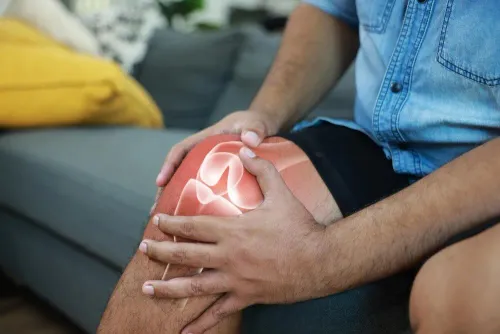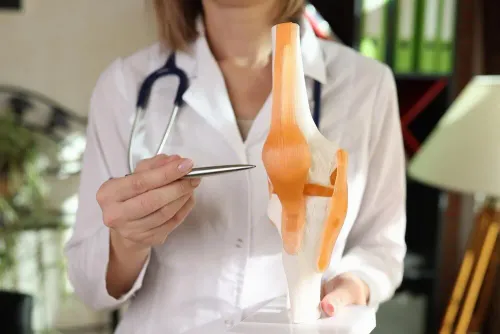
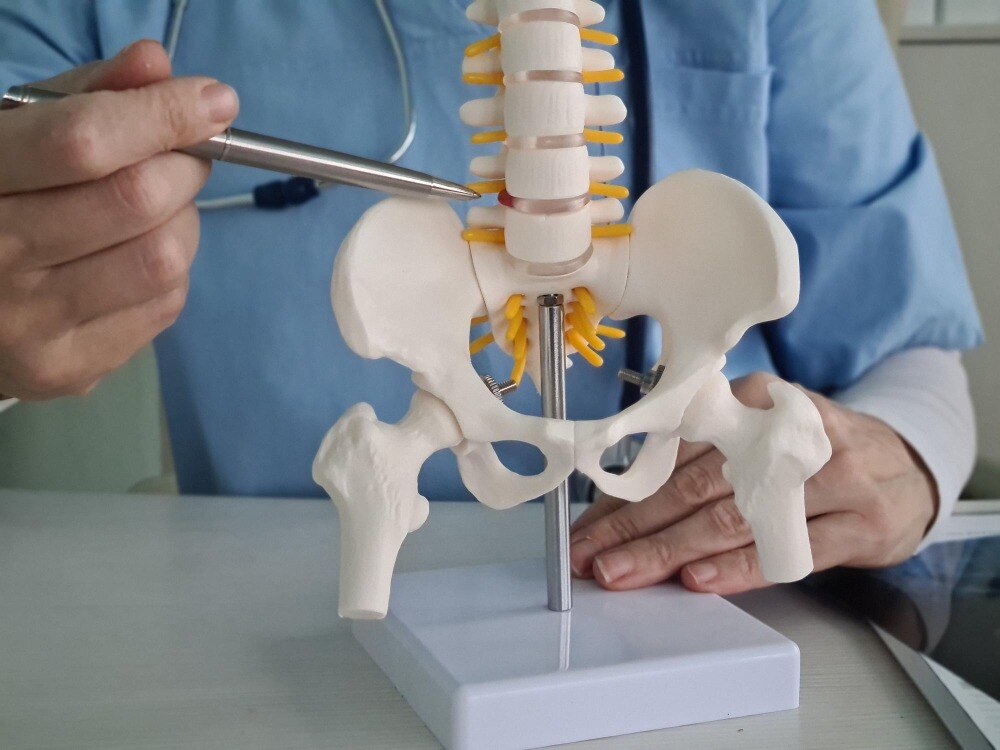
Hip pain can begin in the joint, surrounding tendons, lower back, or even the knee, so the location of pain alone cannot determine whether replacement is appropriate. By the end, you will know which symptoms need prompt or urgent assessment, what an evaluation involves, which treatments to try first, and when surgery becomes a reasonable decision.
Key takeaways
- Groin pain with limping or reduced hip rotation warrants an assessment.
- Seek urgent care after a fall with severe pain or inability to bear weight.
- Examination, movement tests, and X-rays help locate the pain source.
- Try activity changes, physiotherapy, weight management, and pain relief before surgery.
Which hip symptoms suggest a joint problem rather than ordinary stiffness?
Pain from the hip joint is often felt in the groin, but it can travel to the front of the thigh, buttock, or knee. Arrange an assessment if you limp, lose hip rotation, struggle to put on socks, climb stairs, or walk your usual distance.
Knee pain that persists despite knee-focused treatment can still originate in the hip.
| Cause | Typical symptom pattern | Why assessment matters |
|---|---|---|
| Hip osteoarthritis | Gradual groin pain, stiffness after rest, reduced rotation, limping, and pain with walking or stairs | X-rays and examination can show whether joint damage explains the loss of function |
| Avascular necrosis | Deep groin or thigh pain that worsens with weight-bearing and may progress to pain at rest or night | Early assessment helps identify bone damage before the joint collapses |
| Hip fracture | Sudden pain and difficulty bearing weight, often after a fall or a minor injury in weakened bone | A fracture needs prompt imaging and treatment, not routine stiffness management |
| Inflammatory arthritis pain in the hip | Pain with prolonged stiffness, swelling in other joints, or symptoms affecting both sides | Blood tests and specialist assessment may identify an inflammatory condition |
| Labral injury or lower-back nerve irritation | Groin catching or clicking, or burning pain travelling down the leg | The hip, spine, and nerves require separate examination because replacement may not address the source |
Book a clinical review when pain affects sleep, work, dressing, driving, or daily mobility, even if the pain score seems modest. Sudden severe pain, inability to bear weight, fever, or a hot swollen hip requires urgent medical care.
When does hip pain require urgent medical care?
Go to an emergency department now for a fall and inability to bear weight, a shortened or rotated leg, sudden severe hip pain, or a fever and hot swollen hip. These signs can indicate a fracture, dislocation, or infection inside the joint, and delaying treatment can worsen damage.
- After a fall, do not force yourself to stand or walk. Keep the leg still, arrange emergency transport, and avoid trying to straighten or rotate it.
- Treat a shortened or rotated leg as a possible fracture or dislocation, even if the pain briefly eases.
- Seek immediate care for sudden severe hip pain, particularly when you cannot move the leg or put weight through it.
- Fever and hot swollen hip require emergency assessment because a joint infection can damage cartilage and spread quickly.
Arrange same-day medical assessment for rapidly worsening pain, new limping, night pain that prevents sleep, or a sudden reduction in hip movement without a fall. Use a walking aid if you already have one, but stop if it increases pain.
Do not drive yourself when you cannot bear weight, feel faint, or have taken sedating pain medicine.
How does a hip replacement doctor confirm where the pain is coming from?
A hip replacement doctor confirms the pain source by matching your symptoms with examination findings and imaging, rather than treating every hip-area ache as arthritis.
Groin pain with restricted rotation points more strongly to the hip joint; lateral pain suggests bursitis and gluteal tendinopathy, while referred pain from the lower back, lumbar nerve compression, or sacroiliac pain can produce similar disability.
The examination usually includes:
- Your pain location, onset, night symptoms, walking limit, previous injury, fever, and medical conditions such as inflammatory arthritis or avascular necrosis
- Gait assessment for limping, pelvic tilt, or difficulty bearing weight
- Hip rotation, flexion, and extension testing, because painful or reduced rotation supports a joint source
- Strength testing of the hip and leg
- Leg-length comparison
- Examination of the lumbar spine, nerves, sacroiliac joints, and knee; a labral injury, stress fracture, or knee disorder can mimic hip pain
The first images are usually weight-bearing, standing or walking anteroposterior pelvis and lateral hip X-rays. They show joint-space loss, bone spurs, deformity, fracture, or avascular necrosis. At Dr. Girish Motwani Best Orthopedic Surgeon - SUYOG, ask what the X-ray explains before agreeing to more tests.
MRI adds information about labral injury, cartilage, tendons, stress fracture, infection, or early avascular necrosis when X-rays do not explain the disability. CT defines complex bone damage or fracture. Blood tests, including a complete blood count, C-reactive protein, erythrocyte sedimentation rate, and selected arthritis tests, help investigate infection or inflammatory disease.
Related services
Orthopedic Doctors Orthopaedic all orthopedic services available |
Orthopedic all xray View service → |
What can you try before considering hip replacement?
Try nonsurgical treatment before considering replacement, but use the response to test whether the hip joint is the main pain source. These measures can improve function; they cannot reverse advanced cartilage loss, femoral-head collapse, or a fracture.
1. Modify activity by replacing running, jumping, and deep squats with cycling, swimming, or shorter walks. Keep moving, because prolonged rest weakens the muscles and stiffens the joint.
2. Start supervised physiotherapy for hip arthritis. A therapist can tailor range-of-motion work, strengthening exercise for the buttocks and thigh, and aerobic conditioning. Expect some short-term soreness, not steadily worsening pain.
3. Use weight management when excess weight adds load to the joint. Even modest, sustainable loss can make walking and exercise easier, but it will not correct structural damage.
4. Review medicines with a clinician or pharmacist. Paracetamol or an anti-inflammatory drug may help selected people; stomach ulcers, kidney disease, blood thinners, and heart conditions affect which options are safe.
5. Consider a corticosteroid injection when pain blocks rehabilitation. Relief is temporary and an injection does not restore cartilage or guarantee that replacement will be avoided.
6. Add a walking aid if limping or poor balance limits distance. Hold the cane in the hand opposite the painful hip, keep it slightly forward, and move it with the painful leg; incorrect height or use can worsen gait.
Replacement becomes reasonable when pain, sleep, walking, stairs, work, or daily tasks remain limited despite these measures. It is most reliable for joint pain; lateral hip tendons, bursitis, lumbar-spine disease, or nerve irritation may persist after surgery.
Frequently asked questions
Which hip symptoms suggest a joint problem rather than ordinary stiffness?
Groin pain that spreads to the thigh, buttock, or knee, along with limping, reduced hip rotation, difficulty dressing, stair climbing, or shorter walking distance, suggests a hip joint problem.
When does hip pain require urgent medical care?
Seek urgent care after a fall or injury if you cannot bear weight, the hip looks deformed, pain is severe, or you have fever, redness, or swelling around the joint.
How does a hip replacement doctor confirm where the pain is coming from?
The doctor reviews your symptoms, examines your gait and hip movement, checks nearby nerves and joints, and uses imaging such as weight-bearing X-rays when needed.
What can you try before considering hip replacement?
Discuss activity changes, physiotherapy, muscle-strengthening exercises, weight management, walking aids, and suitable pain relief with your clinician before considering surgery.