A torn ACL on an MRI does not automatically mean you need reconstruction. The decision turns on how the injury affects knee stability, your activity demands, associated damage, response to rehabilitation, and whether surgery is safe and worthwhile for you.
Key takeaways
- Seek urgent care for a locked knee, severe swelling, or inability to bear weight.
- MRI and hands-on knee tests help confirm an ACL tear and detect related damage.
- Prehabilitation restores motion, reduces swelling, and strengthens the leg before surgery.
- Reconstruction becomes more likely with instability, pivoting sports, or additional knee injuries.
What the ACL tear is and which symptoms need urgent attention
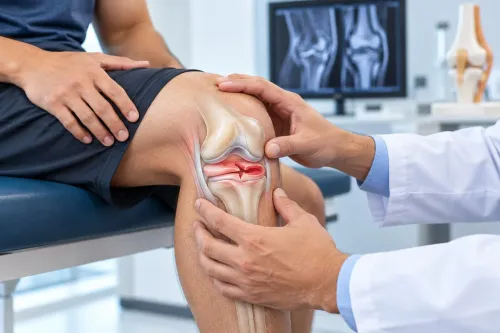
The anterior cruciate ligament (ACL) is a strong band inside the knee that connects the femur to the tibia. ACL anatomy allows it to limit forward sliding of the tibia and excessive knee rotation, especially during cutting, landing, or sudden stops.
A pop followed by swelling within two hours, reduced movement, difficulty bearing weight, or a feeling that the knee is giving way needs prompt medical assessment. Seek emergency care for an obvious deformity, a cold or numb foot, severe uncontrolled pain, or a knee locked in one position.
These symptoms suggest a substantial injury, but they do not prove an ACL tear; blood inside the joint, a kneecap injury, fracture, or meniscus damage can look similar.
| Type of injury | What it means | What early symptoms may suggest |
|---|---|---|
| Partial ACL tear | Some ligament fibres remain attached | Pain and swelling with little or no instability |
| Complete ACL tear | The ligament is fully disrupted | A pop, rapid swelling, restricted motion, and giving way |
| Combined injury | ACL damage with meniscus, cartilage, MCL, or posterolateral-corner injury | Persistent locking, marked tenderness, greater instability, or difficulty bearing weight |
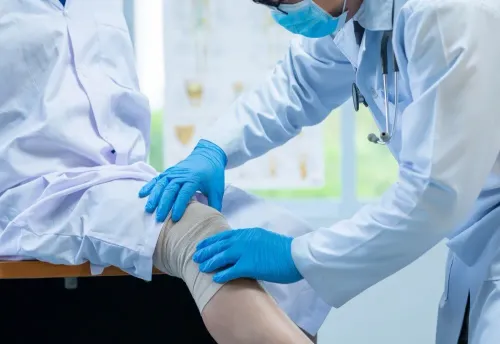
A clinician confirms the concern through the injury mechanism and examination, comparing both knees with the Lachman, pivot-shift, and anterior-drawer tests. MRI can show the tear and associated damage, but an MRI finding alone does not determine whether reconstruction is necessary.
How a clinician confirms an ACL tear
A clinician confirms an ACL tear by combining the injury mechanism, knee examination, and imaging—not by relying on swelling or pain alone. A sudden stop, landing, or change of direction raises suspicion, while tenderness along the joint line points toward a meniscus injury and tenderness over the inner ligament suggests an MCL injury.
X-rays can identify a fracture or dislocation but cannot show the ACL.
The stability examination provides the critical evidence:
- The Lachman test checks whether the shinbone moves forward excessively with the knee slightly bent. A soft endpoint or unusually large movement compared with the other knee supports an ACL tear.
- The anterior-drawer test measures the same forward shift with the knee bent farther. Hamstring spasm, swelling, or an incorrect position can make this result harder to interpret.
- The pivot-shift test assesses abnormal rotation. A sudden clunk as the knee moves can indicate functional ACL insufficiency, although pain and guarding can prevent a reliable result.
The clinician compares both knees and checks range of motion, joint-line tenderness, the patella, other ligaments, circulation, and nerve function. This helps separate ACL instability from a locked meniscus, kneecap dislocation, fracture, or severe sprain.
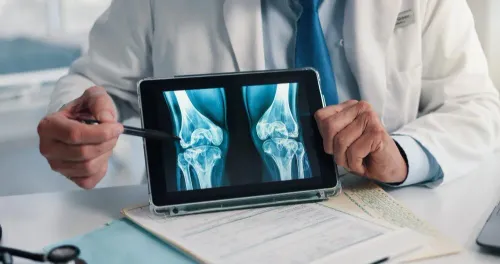
An MRI for ACL tear shows whether the ligament is partially or completely disrupted and reveals associated meniscus, cartilage, bone-bruising, or ligament damage. MRI findings do not automatically justify reconstruction; the examination, instability, activity demands, and associated injuries determine the next step.
Why prehabilitation comes before many surgical decisions
Between injury and a reconstruction decision, use ACL prehabilitation to settle the knee, not to postpone care. Operating on a markedly swollen, stiff knee raises the risk of postoperative loss of motion.
- Reduce swelling and regain knee extension, then work toward comfortable bending.
- Build quadriceps strengthening alongside hamstring strength, balance, and neuromuscular control.
- Avoid pivoting, cutting, and movements that cause giving-way while maintaining safe conditioning.
- Reassess symptoms, motion, strength, and examination-confirmed instability before choosing reconstruction.
Structured nonoperative care is a reasonable plan for a partial ACL tear without instability, or for a complete tear in a lower-demand person who can avoid pivoting activities. It is active treatment, not waiting: you follow a progressive rehabilitation programme, modify risky activities, and attend follow-up assessments.
The plan becomes less convincing when the knee repeatedly gives way despite appropriate rehabilitation, or when your work, sport, or daily activities require rapid cutting and direction changes. Associated meniscus, cartilage, or other ligament damage can also alter the timeline and rehabilitation limits.
A surgeon should therefore base the decision on the knee’s stability and function, your goals, and the condition of the whole joint—not on the MRI tear description alone.
When reconstruction becomes more likely than rehabilitation alone
Recurrent giving way after rehabilitation is the clearest practical reason to discuss reconstruction. An ACL reconstruction surgeon is more likely to recommend it when examination confirms instability and you need to return to pivoting sports, physically demanding work, or activities requiring sudden cutting.
A complete ACL tear with repeated instability can damage the meniscus or cartilage further, even when pain remains modest.
| Finding | Surgery becomes more likely when | Rehabilitation alone may fit when |
|---|---|---|
| Complete ACL tear | The knee remains unstable, or your work or sport demands pivoting | You have stable function, lower activity demands, and can avoid cutting movements |
| Partial ACL tear | Examination shows laxity and repeated giving way | The knee is stable after structured rehabilitation |
| ACL tear with another injury | Meniscus, cartilage, MCL, or posterolateral-corner damage needs coordinated treatment | Associated injuries are minor and the knee remains functional |
A meniscus repair and ACL reconstruction together create a different recovery plan from ACL surgery alone. Protecting the repair can require temporary limits on weight bearing or knee-flexion range; a partial meniscectomy usually allows faster motion and weight bearing. Ask for the exact restrictions before planning work or sport.
An MRI tear alone does not settle the decision. Age, examination-confirmed instability, activity goals, and your ability to avoid pivoting all matter. When reconstruction is indicated for an acute isolated tear, AAOS guidance says surgery within three months may be considered to reduce additional meniscal pathology; it does not mean every tear needs immediate surgery.
What to weigh before choosing reconstruction
Do not choose reconstruction by calendar alone. If surgery is indicated for an acute isolated ACL tear, the AAOS ACL guideline says reconstruction within three months may reduce additional meniscal damage; it does not mean every tear needs immediate surgery. Prehabilitation should restore near-full motion, reduce swelling, and rebuild quadriceps strength before an operation.
| Decision | What it offers | What to weigh |
|---|---|---|
| Timing | Early surgery may limit further meniscal pathology; rehabilitation-first permits recovery before deciding | The KANON trial found similar five-year patient-reported outcomes, and about half of the rehabilitation-first group avoided surgery |
| Graft | An autograft usually has a lower failure risk than donor allograft in young or active patients | Patellar tendon, hamstring, and quadriceps tendon grafts trade kneeling or front-knee pain against hamstring weakness and different failure risks |
| Rehabilitation | Structured physiotherapy targets motion, strength, balance, and a graded return to activity | Expect months of work; operating on a stiff, swollen knee raises concern for postoperative stiffness |
Discuss ACL reconstruction risks plainly: infection, blood clot, motion loss, persistent pain, incision numbness, graft failure, and injury to the opposite knee. Arthroscopy does not guarantee a normal-feeling knee.
Set the goal before consenting: reliable daily stability, a particular sport, or avoiding instability during work. Reconstruction restores mechanical stability but does not reliably prevent arthritis. At Dr. Girish Motwani Best Orthopedic Surgeon - SUYOG, ask how your meniscus, cartilage, activity demands, and preferred graft alter that plan.
Frequently asked questions
Which ACL tear symptoms need urgent medical attention?
Seek prompt assessment for a locked knee, severe swelling after an injury, inability to bear weight, or repeated giving-way episodes.
How does a clinician confirm an ACL tear?
A clinician reviews how the injury occurred, checks knee stability and movement, and may order an MRI to assess the ACL and other structures.
Why does prehabilitation come before many ACL surgery decisions?
Prehabilitation reduces swelling, restores knee movement, and rebuilds leg strength, creating better conditions for recovery and helping clarify whether instability persists.
When is ACL reconstruction more likely than rehabilitation alone?
Reconstruction becomes more likely when the knee repeatedly gives way, you need pivoting activity, or the tear occurs with meniscus or other ligament damage.
What should you weigh before choosing ACL reconstruction?
Consider knee instability, activity goals, associated injuries, rehabilitation time, surgical risks, and whether structured rehabilitation controls your symptoms.