
Pain that limits walking, stiffness after rest, or a swollen joint needs more than a label such as “arthritis.” By assessing the pattern of symptoms, testing only when it adds useful information, and matching treatment to your daily limitations, an arthritis doctor helps you choose safer ways to move and recover function.
Key takeaways
- Track morning stiffness, swelling, triggers and limits on walking or sleep.
- Bring medication lists, symptom timelines and previous imaging reports to your appointment.
- Treatment should target pain relief, joint movement and the function you need daily.
- Seek urgent assessment for a hot, swollen joint with fever or sudden severe pain.
How an arthritis doctor identifies the cause of joint symptoms
An arthritis doctor identifies the cause by matching your symptom pattern with the examination, not by relying on an X-ray alone. They ask when the joint pain began, how long joint stiffness lasts after waking, what triggers it, whether swelling comes and goes, and how reduced mobility affects walking, work or sleep.
| Pattern | Clues | Likely direction |
|---|---|---|
| Osteoarthritis | Pain increases with use; morning stiffness usually lasts less than 30 minutes; movement is limited gradually | Cartilage and bone changes |
| Rheumatoid arthritis | Persistent swelling, warmth and stiffness lasting more than 30 minutes; several joints or both hands and feet may be affected | Inflammatory arthritis; rheumatology assessment |
| Gout | Sudden, intense pain with a red, hot, swollen joint, often the big toe | Uric-acid crystal inflammation |
| Injury | Symptoms begin after a fall, twist or impact; bruising, focal tenderness or instability may follow | Sprain, tendon injury or fracture |
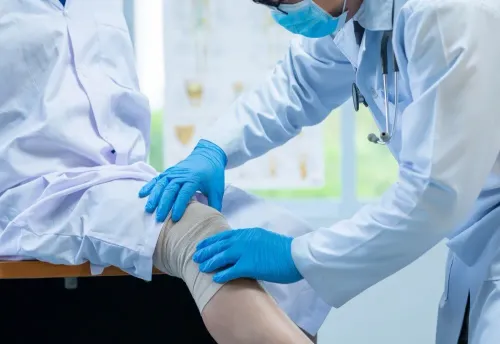
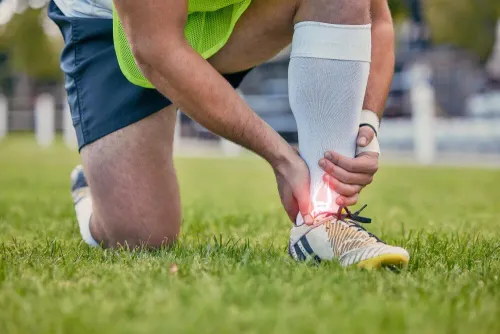
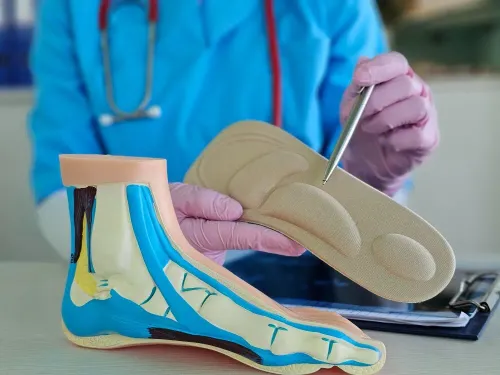
The examination checks swelling, warmth, tenderness, deformity, strength and range of motion. For foot or ankle symptoms, the doctor also watches your gait and assesses alignment, footwear, skin and sensation because a stress fracture, nerve disorder, tendon problem or infection can mimic arthritis.
Persistent synovitis deserves prompt specialist assessment even when blood tests or plain X-rays are normal. A suddenly hot, very swollen joint with fever, chills or inability to bear weight needs urgent care because septic arthritis or a fracture requires rapid testing and treatment.
What to bring to the appointment and when imaging helps
Take a seven-day symptom record to the appointment. Note when pain began, which joints are affected, how long morning stiffness lasts, whether joint swelling appears, and what makes symptoms better or worse. Record difficulty walking, climbing stairs, gripping objects, working or sleeping, because function matters more than an image alone.
Bring:
- A list of medicines, supplements and allergies, including recent steroids, painkillers or antibiotics.
- Details of previous injuries, operations, gout attacks, psoriasis, bowel disease, fever or recent infection.
- Photographs of swelling that has disappeared before the visit.
- Copies of earlier blood-test results and scans, with the dates and body parts examined.
The examination may include gait, alignment, footwear, skin, sensation, range of motion and tenderness, especially for foot or ankle pain. Blood tests such as C-reactive protein, erythrocyte sedimentation rate, rheumatoid factor, anti-CCP antibodies or uric acid are chosen according to the findings; normal inflammatory results do not exclude persistent synovitis.
A hot, swollen joint may need aspiration to test joint fluid for crystals or infection.
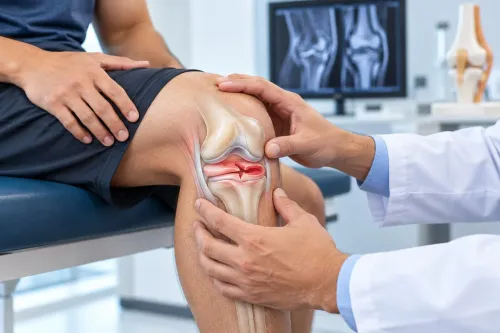
An X-ray shows alignment, bone change, osteophytes and joint-space narrowing, but it cannot measure pain and a normal result does not exclude early inflammatory disease. Ask whether weight-bearing X-ray views are needed for knee, foot or ankle symptoms; standing images reveal load-related alignment and space loss.
MRI or ultrasound helps assess tendons, stress fractures, cartilage or synovitis when an X-ray cannot explain restricted movement.
How treatment choices are matched to pain and function
The choice depends on pain, walking distance, sleep, work and daily tasks—not an X-ray alone. A doctor compares benefit, risk and how long each option is likely to help before building an osteoarthritis treatment plan.
| Option | Main benefit | When it fits and its limits |
|---|---|---|
| Exercise | Builds strength and preserves movement | Core treatment; begin with low-impact activity and progress gradually. A brief flare does not automatically mean joint damage. |
| Weight management | Reduces load on weight-bearing joints | Useful alongside exercise when you are overweight or living with obesity; it is not a replacement for strengthening. |
| Topical NSAIDs | Local pain relief with less whole-body exposure | Often suits knee osteoarthritis and can help hand symptoms. It is less useful for deep joints such as the hip. |
| Oral painkillers | Broader pain control | Consider after checking stomach, kidney, heart, blood-pressure and medicine-interaction risks. |
| Corticosteroid injection | Short-term relief | Useful for a painful flare or when rehabilitation is blocked by pain; it does not restore cartilage or correct deformity. |
| Walking aid or brace | Improves stability and reduces joint load | Choose the correct height and design after checking gait; poor fit can increase strain or falls. |
| Surgery | Corrects major structural problems | Consider when pain and restricted function remain disabling despite non-surgical care, not because an X-ray looks severe. |
The doctor may combine options rather than move through them in a fixed order. A cane, brace or injection should support rehabilitation, while surgery is judged against recovery demands, medical risks and your goals.
How to exercise a stiff joint without losing function
Use a tolerable dose of movement, not complete rest. Start with short sessions of low-impact exercise, such as cycling, swimming or walking on level ground, and increase duration or resistance gradually.
A temporary ache that settles within 24 hours does not necessarily mean damage; pain that keeps worsening means you need to reduce the load and seek advice.
| Goal | Safer choice | Habit that causes trouble |
|---|---|---|
| Improve fitness | Short, regular walks or cycling | One exhausting session after several inactive days |
| Build support | Strengthening exercises with controlled repetitions | Fast, jerky movements or holding your breath |
| Manage daily tasks | Activity pacing: alternate effort with planned rests | Waiting until pain is severe, then stopping completely |
| Reduce joint load | Use a walking cane in the hand opposite the painful hip, knee or ankle | Buying a cane without checking its height or leaning heavily on it |
Keep the joint moving through a comfortable range, but do not force a locked or sharply painful movement. Avoid prolonged bed rest, which reduces muscle strength and makes stiffness harder to reverse.
Stop exercising and arrange medical assessment if the joint becomes suddenly hot and swollen, you cannot bear weight, or pain follows an injury. A physiotherapist or orthopedic clinician can adjust the exercise dose, check technique and fit a walking cane correctly.
When you need an orthopedic surgeon, rheumatologist or urgent assessment
Persistent synovitis—swelling, warmth and restricted movement that continues—needs prompt specialist assessment, even when blood tests and plain X-rays are normal. Arrange a rheumatoid arthritis referral to a rheumatologist when several joints are swollen, morning stiffness lasts a long time, or symptoms involve the small joints of your hands or feet.
Arrange an orthopedic surgeon review when pain follows an injury, X-rays suggest structural damage, or treatment no longer lets you walk, work or sleep normally. A rheumatologist manages inflammatory diseases such as rheumatoid arthritis, gout and psoriatic arthritis, including disease-modifying medicines; an orthopedic surgeon addresses damaged joints, deformity and procedures.
Seek specialist review when you have:
- Swelling in more than one joint, or persistent swelling in a hand or foot joint.
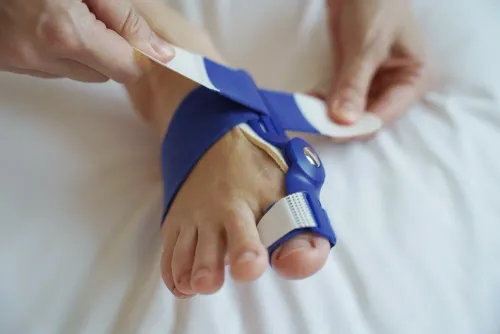
- Foot and ankle arthritis that limits walking despite suitable shoes, activity changes, exercises or a brace.
- Repeated locking, giving way or loss of movement after an injury.
- Pain that remains disabling after a properly followed non-surgical treatment plan.
A suddenly hot, very swollen joint with fever, chills, severe illness or inability to bear weight needs urgent same-day assessment, not routine arthritis treatment. Infection inside the joint can permanently damage cartilage and often requires joint-fluid testing. Seek urgent care after significant trauma when a fracture is possible.
For foot and ankle arthritis, Dr. Girish Motwani Best Orthopedic Surgeon - SUYOG can help determine whether weight-bearing foot and ankle views, specialist treatment or surgical discussion fits the pattern.
Related items
 | Ankle and foot arthritis Ankle and foot arthritis View product → |
Orthopedic Doctors Orthopaedic all orthopedic services available |
Frequently asked questions
How does an arthritis doctor identify the cause of joint symptoms?
They combine your symptom history with a physical examination, checking pain timing, morning stiffness, swelling, movement and effects on walking, work or sleep. An X-ray is only one part of the assessment.
What should you bring to an arthritis appointment?
Bring a medication list, details of when symptoms began, notes on stiffness and swelling, and previous blood-test or imaging reports. Record what worsens symptoms and which activities you can no longer do.
When does imaging help with arthritis symptoms?
Imaging helps when the examination suggests structural damage, injury, altered joint alignment or another condition that affects treatment. Your doctor chooses the test based on the joint and clinical question.
When should you see an orthopedic surgeon, rheumatologist or seek urgent assessment?
An orthopedic surgeon evaluates structural problems and surgical options, while a rheumatologist assesses inflammatory or systemic arthritis. Seek urgent assessment for sudden severe pain, a hot swollen joint with fever, or an inability to bear weight.
Related product
 | Achilles Tendon Injuries Treatment Achilles Tendon Injuries Treatment Achilles Tendon Injuries Treatment View product → |